

Humans smell like humans. Or at least they used to.
For most of human history those smells were simply part of being alive. They whispered things about health, attraction, and who you were. Long before science began talking about pheromones, people were already responding to those signals without realizing it.
Perfumers understood this long before they understood the chemistry. Classic perfumes were built to cooperate with the body rather than fight it. Ingredients like musk, civet, leather, and oakmoss produced warm, slightly animalic notes that echoed the chemistry of human skin. They mingled with the wearer’s natural scent and deepened it. A good perfume didn’t erase the body. It amplified it.
And for a long time that was how perfume worked.
But somewhere along the way we got lost. Now many modern perfumes try to bury the body beneath the smell of clean laundry and soap.
So how did we get so far off track?
The Biology of Human Scent
The way people smell to us begins in chemistry and ends in emotion.
Smell is unusual among the senses because it connects directly to some of the brain’s oldest structures, such as the amygdala and hippocampus, which shape emotion, memory, and desire. Signals from the nose reach these areas without first passing through the slower analytical parts of the brain.
In that sense, smell bypasses the careful rational mind and lands somewhere deeper. That is why a scent can trigger a memory instantly, or make someone seem suddenly familiar, intriguing, or irresistible.
A big part of that scent comes from chemicals our bodies make from sex hormones. Those steroid molecules seep out through sweat and skin oils, and bacteria on our skin break them down into smaller volatile compounds that drift into the air around us.
Our skin is constantly releasing other molecules as well, derived from fatty acids and normal metabolism. As they reach the surface, bacteria transform many of them into airborne compounds that give each person a scent that is subtly unique.
Some of the most interesting of these molecules originate from androgen hormones such as testosterone, tied to the chemistry of attraction and social recognition. The human nose is remarkably sensitive to them.
A smell can trigger a vivid memory, a feeling of comfort, or an instinctive sense that someone is appealing or familiar before we have time to explain why.
And this is why scent can sometimes cause emotion to override rational judgment.
The Man Who Took Perfume Apart
Years ago, while I was digging into perfume, I came across one of the most interesting books ever written about smell: The Emperor of Scent. Reading it sent me down a rabbit hole that eventually became the impetus for this article.
It tells the story of Luca Turin, a biophysicist who wandered into the perfume world and started asking questions that nobody there seemed comfortable answering.
For decades the official scientific explanation of smell had barely changed. The prevailing theory claimed that odor came from the shape of molecules fitting into receptors in the nose like a lock and key. As the saying goes, the science was settled.
Turin wasn’t convinced.
He proposed something very different. Instead of shape alone, he argued that smell might depend on the way molecules vibrate. If that were true, scent would no longer be something discovered slowly through intuition and experimentation. It could be understood, predicted, and deliberately constructed.
The reaction from both the academic world and the perfume industry was closer to panic than curiosity. Academics had built careers on the lock-and-key theory, while perfumers guarded their formulas in private notebooks and trade secrets, passed down through apprenticeships and quiet tradition.
At one point Turin’s work was submitted to Science, supposedly one of the most prestigious journals in the world. What followed was a demonstration of how peer review can behave when a theory threatens the status quo.
There was no open debate, no careful testing of the evidence. The paper was handed to reviewers who treated the idea as something to eliminate. It wasn’t argued against. It was quietly buried.
“It’s a big club, and you ain’t in it.” — George Carlin
But if Turin was right, his theory had the potential to disrupt the entire industry. What had once been the guarded knowledge of a few master perfumers might now, in an age of ubiquitous AI and modern chemistry, be analyzed, reconstructed, and reproduced by a determined experimenter working in a small lab.
Imagine a device that could read molecular vibrations and display them the way a modern SDR program reveals the radio spectrum, turning invisible signals into a visible pattern of frequencies.
Once scent could be seen that way, recreating it would no longer be guesswork. It would just be engineering.
When Perfume Was Intoxicating (1920s–1960s)
Let’s step back to the early twentieth century, when perfume was something entirely different.
Air conditioning was rare. Washing machines were still spreading into homes. Most people did real work and walked long distances every day. Cities smelled stronger. Streetcars rattled past open windows. People smelled stronger too. Bars, dance halls, and crowded restaurants filled the air with cigarette smoke, wool coats, leather jackets, perfume, and sweat.
Music was louder and the rooms were packed. Big band and early jazz poured out of dance halls and bars where people crowded shoulder to shoulder. The energy there came from the same place as the music itself: people working hard, living independently, and not worrying about sanding life’s rough edges. As it was once explained to me, in hard years, especially during wartime, people gathered in places like that to forget their troubles for a few hours and feel alive again.
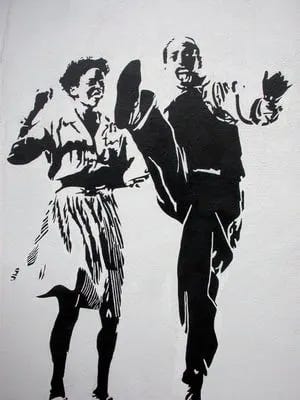
That older world was also less afraid of the physical realities of life. The human body was simply part of the landscape, not something that had to be constantly managed or sanitized away. The smells of work, movement, and proximity were ordinary parts of daily life.
In that world, perfumes were not meant to hide the body but to mingle with it and amplify it’s natural smells.
One of the most famous perfumes of that era was Chanel No. 5. When it appeared in 1921 it was unlike anything people had smelled before. Bright aldehydes gave it a sparkling, almost champagne-like opening, but underneath was a deep base of musks, woods, and animalic notes that bloomed as the perfume settled into the warmth of the body. What began polished and elegant slowly turned warm and quite intoxicating.
Then there was Bandit. If Chanel No. 5 was elegance, Bandit was the woman in the red dress you couldn’t ignore. It opened sharp and green with galbanum, then settled into leather, oakmoss, patchouli, and vetiver. One spray could fill a room. On skin it became darker and more sensual, the kind of perfume that seemed to grow warmer as the night went on.

Then there was Bay Rum. For generations barbers splashed it on after a shave, a spicy blend of bay leaf, rum, and warm Caribbean spices. It opened sharp and bracing, then settled into something deeper as it warmed. Imagine it for a moment. It was a scent that seemed to amplify the warm chemistry of skin, sweat, and testosterone.
Note: Many of these fragrances have been reformulated over the years, and modern versions smell quite different from the originals people knew in those earlier decades. From time to time original bottles still surface in vintage fragrance markets and online auctions.
Even as the counterculture of the 1960s reshaped music, fashion, and social life, perfume still played by those same rules. It was meant to meet the body, not erase it.
When the Dance Floor Was Hot (1970s)
By the 1970s the music had changed, but the atmosphere hadn’t. The big bands were gone, replaced by funk, soul, and disco, but people still gathered in the same way: crowded rooms, packed dance floors, bodies moving together in the heat.
Disco clubs were loud, dark, and alive. Lights flashed across mirrored walls and spinning balls overhead. The air was thick with cigarette smoke, sweat, and perfume.

One of the defining scents of the era was Halston, a deep chypre built around oakmoss, patchouli, amber, and woods. Warm, rich, and unmistakable, it had the kind of presence that could cut through the smoke and heat of a crowded club.
Then there was Opium. Dark, spicy, and full of resins and woods, it carried enormous weight. A single spray lingered in the air and grew warmer as the night went on.
For men, Paco Rabanne Pour Homme captured the same spirit. Built on a classic fougère structure of lavender, oakmoss, herbs, and woods, it was bold, masculine, and impossible to miss. Like the other fragrances of the era, once it warmed up it carried easily through crowded rooms.
When Perfume Got Loud (1980s)
By the 1980s, disco had faded, replaced by drum machines, synthesizers, and a harder electronic sound that pulsed through the clubs.
The atmosphere had changed too. Leather jackets and pants, aerosol hair spray, cigarette smoke, and sweat thickened the air. The rooms were still hot and crowded, but the style was bigger, bolder, and more theatrical.
In a decade that celebrated ambition and spectacle, fragrances grew louder and more dramatic. They no longer lingered quietly on the body. They filled the room.
One of the defining perfumes of the era was Poison. It was unmistakable. Dense and dramatic, it opened with a rich sweetness before unfolding into dark spices, resins, and woods. In a crowded bar it could announce itself long before the woman wearing it entered the room.
Then there was Giorgio Beverly Hills. It was also impossible to ignore, but in a different way. Built around huge white florals like tuberose and jasmine layered over woods and musk, it was bright, bold, and incredibly strong. Department stores had to move the display near the entrance because the scent filled the entire floor. What began as a sharp burst of flowers slowly settled into a warm musky sweetness that lingered long after the wearer had gone.
Then there was Drakkar Noir. For many men in the 1980s it was the scent of the night. Built on a dark fougère structure of lavender, oakmoss, herbs, woods, and leather, it was sharp, masculine, and unmistakable. It projected strongly at first, then deepened into something darker and slightly smoky as the hours passed.
Giorgio Beverly Hills was the blonde in the spotlight, bright, glamorous, and impossible to ignore. Poison was that mysterious, dangerous dark-haired woman you kept noticing across the room. And Drakkar Noir was the guy leaning on the bar who simply owned the place.
We Lost the Scent (1990s)
Then sometime in the 1990s something strange happened. Perfume stopped smelling like people and started smelling like laundry soap.
Instead of blending with the scent of the body, fragrances began trying to erase it. In many cases they were chemically indistinguishable from the fragrances used in detergents and fabric softeners.
The culture around them had changed too. The sweaty glamour of disco and the loud excess of the 1980s gave way to a cooler, more restrained style shaped by grunge and early hip-hop. The new look was neutral, understated, and often deliberately androgynous.
CK One (Calvin Klein) became one of the defining perfumes of the 1990s. Light, bright, and deliberately clean, it rejected the old idea that perfume should warm and deepen on skin. Rather it smelled like soap.
CK One was marketed as unisex, meant for men and women alike. The bottle looked almost clinical, like a laboratory flask, and the advertising followed the same idea. Black-and-white photographs of young people in plain jeans and T-shirts replaced the glamorous perfume ads of earlier decades.
The goal was no longer warmth or sensuality but cleanliness. The culture stopped celebrating the body and started sanitizing it.
The Detergent Economy
At the same time something else was happening behind the scenes. The same fragrance companies that designed luxury perfumes were also designing scents for detergents, shampoos, deodorants, and household cleaners.
Those products were produced in enormous volumes, far larger than the perfume market. Their fragrances had to be inexpensive, chemically stable, and able to survive heat, water, and months on a store shelf.
Traditional perfumes relied on complex natural materials such as oakmoss, animalic musks, resins, and woods that created deep, warm bases designed to interact with the chemistry of skin.
Industrial products needed something different. The fragrance industry began building scents from a smaller palette of synthetic musks that were cheap, durable, and easy to reproduce.
One of the molecules that quietly took over was Galaxolide. It had the soft, smooth smell many people associate with freshly washed fabric. Chemically it is a large, bulky hydrocarbon ring packed with methyl groups, a structure that makes the molecule unusually stable, resistant to oxidation, and able to survive heat, water, and long storage without breaking down.
That made it perfect for detergents and fabric softeners, surviving the washing machine and clinging to clothing while leaving behind the lingering scent advertisers called “clean,” though it was really just the smell of the chemicals themselves.
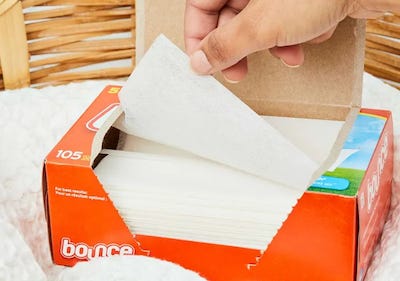
Over time the industry effectively brainwashed people into associating that chemical scent with cleanliness. Clothes washed in detergents smelled that way, and towels and even homes cleaned with modern products carried the same scent. After years of repetition people began to accept that chemical smell as the very definition of clean.
Eventually the same molecules began appearing in perfumes, and the smell of laundry moved from the washing machine into the fragrance bottle.
Side note: It can be argued that regulation also played a part in pushing the industry away from many traditional perfume materials. European regulators began restricting ingredients such as oakmoss after reports of allergic reactions in patch tests. Critics argued that many of those tests focused on people who already had skin sensitivities, producing numbers that looked far more alarming than what most people experienced in everyday life.
Personally, I suspect many more people react to the modern chemistry that replaced those materials. Synthetic musks such as Galaxolide, along with additives derived from corn and other industrial feedstocks, appear in a wide range of modern cleaning products. They are everywhere, in detergents, household cleaners, and personal care products, washing down our drains and circulating through wastewater systems, rivers, and even parts of the water supply.
The Rebellion
Not everyone accepted the new world of soap-clean fragrance. A handful of modern perfumers began pushing back, bringing back the musks, woods, and animalic notes that older perfumes once wore proudly.
One of my favorites is the French house État Libre d’Orange, which deliberately builds fragrances around the very smells modern perfumery tried to erase.
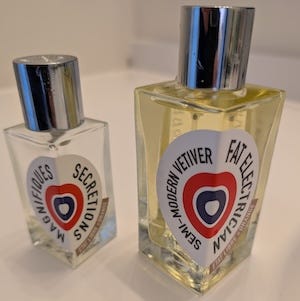
One example is Fat Electrician. Despite the absurd name, it is built around vetiver, woods, and creamy resins that come alive the way older perfumes once did. It smells human and slightly worn in, not freshly laundered.
Then there is Sécrétions Magnifiques. That one goes much further. It deliberately references the metallic, salty, bodily notes associated with skin, sweat, and intimacy. The reviews are legendary. Some people love it. Others say it is revolting. It was designed to shock people, but also to remind them of something modern perfume had tried to forget. The human body has a smell.
The Smell of Being Human
Perfume once amplified the scent of a living body. It warmed on skin, mixed with breath and sweat, and slowly became something uniquely human.
Somewhere along the way modern culture decided to replace that complexity with the smell of soap.
Scent is one of the oldest languages we have. Long before words, it told us who was near, who was healthy, who we were drawn to. A scent can make someone seem warm, mysterious, familiar, or irresistible before a single word is spoken. It binds memory, attraction, and emotion together in ways we barely understand.
When perfume forgets the body and starts smelling like laundry, it isn’t just a change in style. It is a retreat from the chemistry that once made scent feel alive.
In the name of cleanliness we traded warmth for sterility and passion for safety.
But without passion, emotion, and a little danger, are we even alive?
In a world increasingly mediated by artificial intelligence, simulated images, and conversations held through glass screens, we are drifting away from the concept of physical presence. We forget what it means to stand close to another person, to flirt, to share the invisible signals our bodies constantly send.
Perfume once spoke that language.
If you care about how things are made and why they’re built the way they are, you’ll probably like the rest of what I write about. Sometimes I even write about why things stink.
Hitting like and sharing helps real people find the work. The algorithm can go pound sand.
Wow... didn't know perfumes topic was these deep ...enjoyed learning😊
This was brilliantly written and informative in a very interesting and knowledge quenching way. It also makes you want to go out and purchase a bottle of expensive perfume from the past! You ought to sell this to those perfume companies you complement and bring back the oldies! Can’t wait to read the next one from you!