

The Honeymoon’s Over
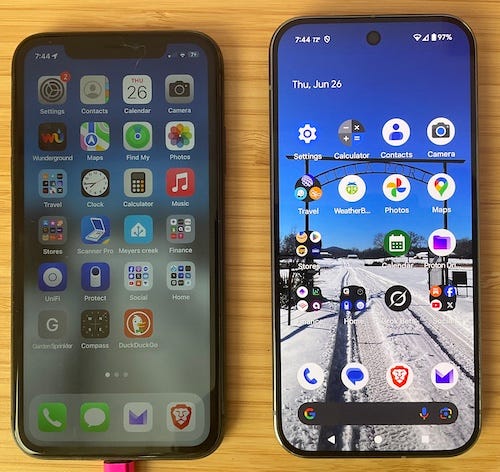
In Part 5 of this series, I wrote about dumping the iPhone 11, taking a run at the Unplugged Phone, and ending up on a Google Pixel 9 Pro. I’ve been using it every day for nine months now. The reality distortion field is gone. It’s time to tell you what I actually think.
First off, I like the phone and I am happy with it. The Pixel 9 Pro does the job well and stays out of my way most of the time. That alone puts it ahead of where I was.
Now let’s get something straight. Google is not your friend. But neither is Apple. The difference is that Google at least lets you push back. Pixel is as private as you make it. Most processing happens on the device, not in the cloud. Data retention is visible, adjustable, and deletable. None of this makes Google virtuous, but it does make the system configurable.
Apple increasingly runs on residual goodwill, not clear, forward innovation. That goodwill was earned years ago in the Steve Jobs era and has steadily faded under Tim Cook.
Anyone who’s read my earlier posts already knows why I was done with Apple. Not only did they stop innovating, their privacy story turned into bullshit. I don’t believe a word of their iCloud privacy claims, especially given how they plan to integrate that data with AI.
The political compromises were the last straw. I never forgave them for role in killing Parler. That was the moment Apple chose censorship over neutrality. I was done.
On purely technical grounds, it’s also hard to justify an iPhone over a modern Pixel. Control, battery behavior, and real capability all favor the Pixel. Apple, at this point, feels less like a technology company and more like a dealer pushing a comfortable habit.
Weaning Myself from Apple
It wasn’t a clean break. I did it in stages, keeping both phones around until I was sure the Pixel could handle everything I actually needed.
The first rule was that iCloud was no longer going to be the center of my digital life. Apple trains you to treat the phone as the vault. Once you reject that idea, everything else gets easier.
I moved the core services first. Proton became the backbone. That addressed most of the real privacy problems without turning the phone into a hacker project. The switch was fairly painless, largely because I was already using Proton on my desktop.
Here’s where things currently stand. Some of this is settled. Some of it is still in progress.
Mail: Proton Mail
The user interface could be much prettier, but it’s adequate, and the privacy advantages are worth the smell. More importantly, it doesn’t crash or bog down the way Apple Mail does. I’ll take private over slick and invasive every time.
File storage: Proton Drive
They’ve come a long way since the first version. It does a solid job syncing files. Google Drive is off, and Proton handles file sync reliably and it keeps my data out of Google’s pipeline.
Photos: ??
I’m still using the Google Photos app locally, with syncing shut off. It works as a viewer, but it can be confusing because it breaks photos up by source (Camera, Screenshots, Messages, etc). Maybe that’s useful, maybe not, but it’s a different mental model than Apple Photos. Proton Drive handles the syncing, but it doesn’t offer a proper desktop photo viewer, only a web interface. So for now, Google Photos is just a local front end, Proton handles storage, and I’m not thrilled with the split-brain setup.
VPN: Proton VPN
I find that it works every time, both on the phone and on the desktop. It’s built around a no-logs architecture, open-source clients, and independent audits. None of this “trust me” bullshit. It’s based in Switzerland, outside the usual US and EU surveillance machinery, and it doesn’t pretend to make you anonymous or invisible. It does one job well: keeping your network traffic out of ISP logs, hostile Wi-Fi, and casual surveillance pipelines.
Passwords: Proton Pass
Absolute win. It’s simple, solid, and doesn’t bog me down. Passwords, 2FA, cross-platform sync. It does exactly what it should do without trying to become a lifestyle brand or upsell you. I trust it more than Apple Keychain, and I don’t miss Keychain at all.
Browser: Brave
Easy win. Same browser on desktop and phone. Built-in ad and tracker blocking. I could do without their AI, and you do need to spend a few minutes turning off features you don’t want. I’m not chasing perfect anonymity here. I just want fewer trackers, less noise, and a browser that renders well.
Calendar: Fossify Calendar
Fossify is a small independent project focused on simple, local, privacy-friendly tools. No accounts, no cloud dependency, no tracking, and unfortunately, no desktop app either. The backend is still a work in progress. I’m building my own CalDAV server, but it’s not there yet.
I wanted to use Proton Calendar, but the app is ugly as sin, and all of the Proton icons are horrific. I filed bugs, but Proton is committed to making everything look the same, whether it makes sense or not. Proton looks like it was designed by a committee that hates eyes.
Contacts:
No good answer yet. I’m still using Google Contacts, and I’m not thrilled about it. It works, but it’s exactly the kind of dependency I’m trying to unwind. This one’s still unresolved.
On the other hand, most of the apps I actually use every day are available on this platform, including some that Apple simply won’t allow. Background services that stay running. Apps that talk directly to hardware. Web apps that behave like first-class citizens instead of second-class hacks wrapped in a permission maze. Android doesn’t make you beg for that kind of control.
I’ve had real success building my own web apps and using them daily. Projects like my weather station or irrigation control would be awkward at best as native iOS apps and would require App Store approval, with Apple retaining the ability to change the rules at any time. On top of that, Swift and iOS SDK changes routinely break or deprecate APIs, forcing rebuilds just to stay compatible. I don’t miss that shit. Not even a little.
Hardware Notes
I’m not going to bother with a spec review. There are plenty of people on the internet who already do that better than I ever will. Numbers don’t tell you how something behaves after you’ve lived with it.
Battery:
After a hard day of use, I usually still have well over three-quarters of the battery left. Charging is handled more conservatively than what I was used to on the iPhone. The phone avoids sitting at full charge under heat, fast charging backs off sooner, and adaptive charging actually does what it claims. Over time, that shows up as steadier day-to-day behavior instead of a battery that suddenly feels tired and conveniently coincides with a new phone launch.
Wireless charging works reliably. I just drop it on the Pixel stand at the end of the day, without the weird bullshit Apple still hasn’t figured out.
USB storage:
Plug in USB storage, grant access once, move files, unplug it. No apps, no syncing rituals, no ecosystem dance. I use this almost daily with a drones I fly on the farm, and it works exactly the way it should.
Apple hasn’t figured this out because they don’t want to. Simple USB access breaks the illusion that everything needs to flow through their software and their cloud.
Camera:
Reliable enough that I don’t think about it, and that’s the point. Photos are fast, consistent, and predictable. Pixel’s computational photography is still ahead of Apple in the ways that matter day to day. I’m not chasing AI-curated memories or cinematic nonsense. It does the job without forcing me into another cloud pipeline.
Software updates:
Security patches and OS updates arrive on a regular monthly cadence, with new fixes rolling out around the same time each month. Pixels also get periodic feature updates and OS upgrades during their supported lifecycle, which can stretch into five or seven years depending on the model. That predictability beats surprise changes and erratic schedules.
Agency Is Non-Negotiable
This wasn’t about finding a perfect phone. It was about reclaiming leverage. The Pixel 9 Pro isn’t pure, and Google isn’t benevolent, but I’m no longer trapped inside a system that asks for blind trust while quietly tightening the screws. I have more control, fewer surprises, and real exit options again. That’s the difference that matters. If that ever changes, I’ll move on.
Loyalty Is for Dogs — and People Who Earn It
If you believe tools should serve people instead of pretending to be your buddies, you’ll probably like the rest of what I write about. Hitting like and sharing helps real people find the work. The algorithm can go pound sand.
Good advice as usual. I have been slowly preparing for my current iPhone to reach end of life to make a change myself. In the meantime I am also trimming back what I have on the device. Fewer and fewer apps, and no Social Media except YouTube (for now). At some point I will probably need a small tablet for useful apps that I don't want on my phone along with web browsing.
https://substack.com/home/post/p-40428694